Specification and selection
|
|
Spec & select
Product evaluate
Bid review
System select
|
Specification and selection ‘Spec & select’ services are applicable to a wide
range of technology related purchases. The process is constant: Clarify the
need Justify an
investment Define the
requirement Identify
the potential suppliers Invite bids Evaluate
the responses Select the
solution And then
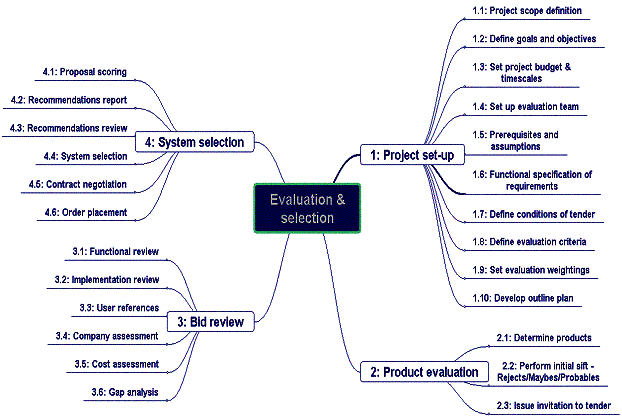
implement the solution. The following diagram and notes explain the process: -
_______________________________________________________________________ 1: Project set-up 1.1: Project scope definition Define the outline scope of the project in business terms.
This translates to which areas of the business are to be included in the
functional scope. The scope should address the business as a whole and go
beyond current systems and requirements; it should establish an anticipated
life of the new system and project the affects of any business plans. Business workshops (e.g. e-commerce) should be considered
to appreciate the capabilities and potential impact of potential solutions. 1.2: Define goals and objectives Define the purpose, perceived benefits and justification
for the project. Special attention should be given to how these goals can
be achieved and any objectives should be stated in terms of measurable
achievements against clear timescales. Typical goals: Improve
customer service Reduce lead
times Improve
communication with customers and suppliers Typical objectives: Reduce
obsolete stock write offs by 10% Reduce
planning lead-time by 1 week Get new
product introduction down to 10 days Improve technical
record keeping and provide quicker access Project objectives: To
implement a replacement system within agreed timescales To minimise
risks and disruption to the business during implementation To replace
all current Chess based systems and widen the functional scope To provide
a single, integrated solution across the company 1.3: Set project budget & timescales Determine outline project costs – the prudent shopper will
only go out shopping when they know how much they can spend and the relative
costs of what they can buy. Determine outline timescales – the following guidelines
reflect typical timescales 3 - 5
months to specify select and order a replacement system 3 - 4
months to develop an effective proof of concept 3 - 6
months to roll out the solutions 1.4: Set up evaluation team You need to define the specific functional areas involved
and then establish the relevant representatives. Typical candidates for say a
manufacturing system, being: - Manufacturing Customer
Services Purchasing
& materials planning Quality Stock
management & warehousing Finance IT The specific business process covered by these areas
should be defined and agreed with the representatives 1.5: Prerequisites and assumptions Any pre-requisites should be identified; at the very least
we suggest that current work in progress is reviewed to determine if any
specific projects should be concluded before resources are directed onto the
evaluation. Some typical assumptions are suggested below: Must be OBDC
compliant? Must have a
European support centre. Must have a
local regional office. Must be
implemented and referencable in the region. Must have
an established clients base in the same business sector. No
customisation should be essential Should support
24 hour working (system) All
proposed products/integration must be referencable. There is no
corporate system selection/buying policy. Etc
etc 1.6: Functional specification of requirements This area should be developed by a workshop with the
functional representatives (once appointed). The workshop should define the
key requirements within the functional scope of the project. Ideally this
activity would be a follow on from a system survey or Business Process
Mapping exercise. 1.7: Define conditions of tender We can provide specialist consultancy on defining the
terms and conditions for tendering and ultimately contracts. 1.8: Define evaluation criteria Hold a project team workshop to establish the evaluation
criteria and apportion the responsibilities for each area. 1.9: Set evaluation weightings Once the evaluation criteria have been defined the
relative weightings would be established. 1.10: Develop outline plan Prepare a project plan outlining the major milestones of
the project. The plan should define the interdependency of project
tasks; it should record ownership and set timescales. 2: Product evaluation 2.1: Determine products Identify potential products that broadly meet the
requirements, likely information sources being trade groups, internet, trade
magazines, exhibitions 2.2: Perform initial sift. The initial list can typically be quickly separated into
Rejects / Maybes / Probables using simple criteria such as cost, referencability
and business sector focus. 2.3: Issue invitation to tender Send out the invitation to tender, with tender rules, to
the ‘Probables’. 3: Bid review The bid review process involves assessing the supplier’s
capabilities across the areas that you have agreed will form the basis of
comparison and selection. It’s important to establish an ‘apples with apples’
perspective so that objective rather than emotive or subjective assessments
can be made. Typical areas of review are: Functional
review Implementation
review User
references Company
assessment Cost
assessment Gap
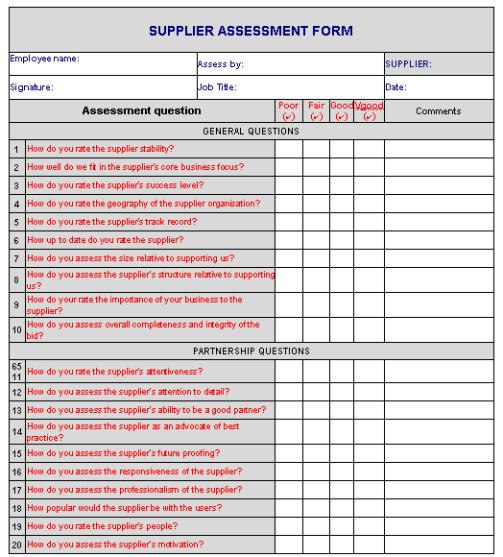
analysis 4: System selection 4.1: Proposal scoring A proposal scoring mechanism should be applied to each
prospective solution. Each area being covered by a series of weighted
questions, see example below:
4.2: Recommendations report The results of all the assessments should be collated and
condensed into a recommendations report. This report will represent the project
team’s findings with supporting evidence to back up any recommendation. It
should be noted that the ‘appliance of science’ should not detract from a
common sense approach the evaluation. At the end of the day the right system
is probably the one with the best following and commitment from the
evaluation team (that is presuming that the evaluation has been conducted on
a ‘we want to buy’ rather than a ‘you can sell’ basis! Note that the best
salespeople may not necessarily represent the best solution!). A few sanity
checks: - Do the
scorings match your ‘gut feel’? Are all the
team members behind the result? Has the
supplier inspired the team with an ability to be a good partner? 4.3: Recommendations review The recommendation report should be the subject of a review meeting with all the principle parties represented (minimum attendance being the project sponsor, the steering committee and the evaluation project team). The outcome of this meeting being hopefully an endorsement of the selection (or maybe a definition of further work required to gain that endorsement) and a commitment to proceed to contracts and order placement. Specification and selection - BACK TO TOP |